Updated November 13, 2025 | Originally published January 6, 2025
You might be asking, What is a Tonometer? Simply, it’s a medical device used to measure intraocular pressure (IOP). Your IOP is the key reading that helps detect and manage glaucoma early. It’s one of the most essential tools in modern eye care because elevated IOP is the leading risk factor for glaucoma, a disease that can cause permanent vision loss if left untreated.
By accurately measuring IOP, a tonometer helps eye doctors detect glaucoma early and track how well treatments are working. Today, handheld and at-home tonometers make this process even easier, allowing patients to check their eye pressure safely between visits.
Understanding how glaucoma affects the eye explains why tonometry is so vital.
Glaucoma can affect anyone, regardless of age or background.
The Glaucoma Research Foundation reports that some 80 million people worldwide have the disease. It’s responsible for up to 12% of blindness cases, affecting 5.9 million people. Only cataracts lead to more instances of blindness.
A study, “Prevalence of Glaucoma among US Adults in 2022,” published in JAMA Ophthalmology, found that approximately 4.22 million people in the United States and 1.49 million people have vision-affecting glaucoma.
Glaucoma is six times more common among Black or African American people than White people.
What makes glaucoma so dangerous is that it’s often asymptomatic in its early stages. By the time vision changes become noticeable, permanent damage to the optic nerve may already have occurred.
Here’s the catch. Because there are usually no symptoms, only 50% of people with glaucoma even know they have it (CDC).
The disease progresses quietly, earning its reputation as the “silent thief of sight.” Early detection and regular monitoring are the only proven ways to slow or stop its progression.
Indeed, a 2016 study found that 81% of glaucoma cases among Hispanic or Latino people are undiagnosed and untreated compared to 73% in non-Hispanic White people. By the year 2050, it is expected that 50% of all glaucoma patients in the United States will be Hispanic people.

The leading risk factor for glaucoma is elevated intraocular pressure (IOP), the fluid pressure inside the eye. Under normal conditions, aqueous humor (the eye’s clear internal fluid) flows continuously through a drainage system that keeps pressure balanced. But when that drainage becomes impaired, IOP rises, gradually damaging the optic nerve fibers that transmit visual signals.
Because this pressure buildup occurs without pain or other obvious symptoms, regular IOP monitoring is critical for detecting glaucoma early and preventing blindness.
Learn more about the relationship between glaucoma and eye pressure. It could help save your eyesight.
A tonometer is a medical device designed specifically to measure intraocular pressure. It’s the cornerstone of glaucoma detection and management, providing the data doctors need to assess risk and track disease progression.
“Eye pressure isn’t something you can feel, yet it’s one of the most critical measures for protecting the optic nerve. A tonometer gives us a direct window into how healthy your eyes truly are.” — Dr. Barbara M. Wirostko, MD, FARVO, Adjunct Professor of Ophthalmology and Biomedical Engineering, Moran Eye Center.
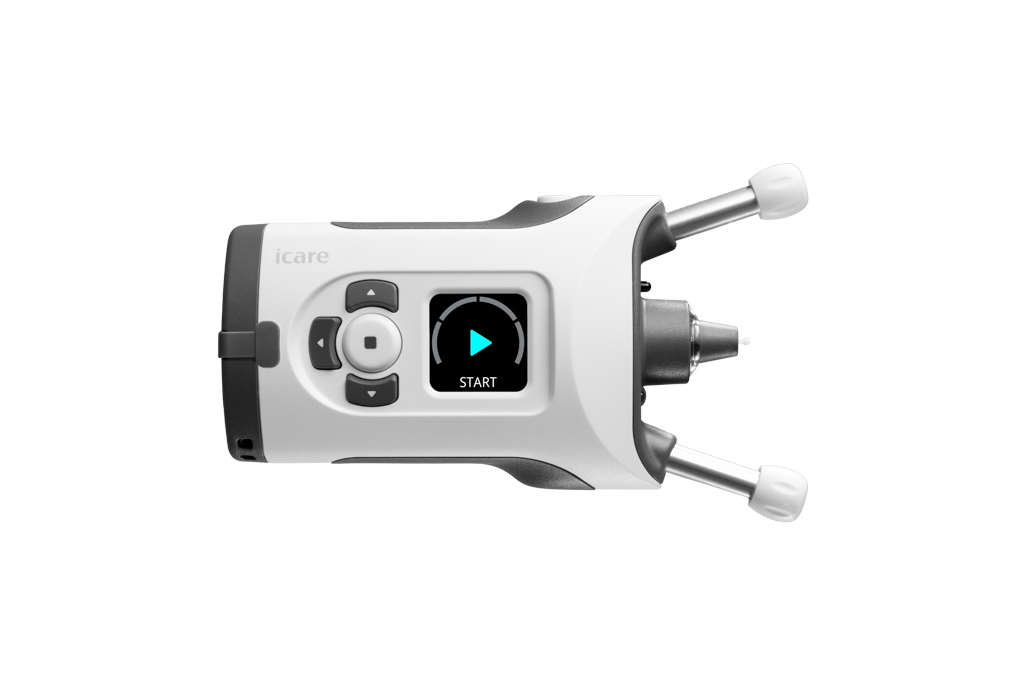
Today’s technology makes this even more accessible. A handheld tonometer is an essential tool in glaucoma care. It allows patients to measure eye pressure anytime, from the comfort of home.
This innovation empowers patients to take a proactive role in their eye health, helping doctors identify dangerous pressure fluctuations that might otherwise go unnoticed between office visits.
Read more about how IOP measurements help treat glaucoma.
A tonometer is a medical device that measures IOP, or the fluid pressure inside your eye. The balance between the production and drainage of this fluid affects the pressure.
When the pressure is too high, it can damage the optic nerve, leading to vision problems. Monitoring this pressure is essential to protecting your eyesight.
Technology has made tonometry more accessible and less invasive. Available for purchase, devices like the iCare Home2 tonometer allow patients to monitor their eye pressure from home. These advancements make it easier to detect and manage high IOP early, reducing the risk of severe vision problems.
Tonometry can be performed in several ways, depending on the patient and setting. While some devices are designed for clinical precision, others focus on comfort or accessibility. The chart below compares the most common types of tonometers used today.
“Each tonometer serves a unique purpose. In-office devices like Goldmann are exact, while a home tonometer empowers patients to track their eye pressure regularly, giving doctors better data between visits.” — Dr. Barbara M. Wirostko, MD, FARVO, Adjunct Professor of Ophthalmology and Biomedical Engineering, Moran Eye Center.
| Tonometer Type | How It Works | Touch/No-Touch | Where It’s Used | Key Benefit |
| Goldmann Applanation | Measures the force needed to flatten a small area of the cornea. | Contact | Eye doctor’s office | The most precise clinical measurement of intraocular pressure (IOP). |
| Non-Contact (Air Puff) | Uses a gentle puff of air to flatten the cornea and estimate IOP. | No-Touch | Clinics and optical centers | Quick, painless, and ideal for screening large groups. |
| Handheld / Rebound | A lightweight probe briefly bounces off the cornea to measure IOP. | Minimal Contact | Home or clinic | Portable, easy to use, and enables self-monitoring at home. |
| Indentation (Schiøtz) | A small plunger indents the cornea to gauge resistance. | Contact | Less common / older method | Inexpensive and straightforward, but less accurate. |
Because every patient and setting is different, there’s no single way to measure eye pressure. Over time, several tonometer types have been developed to balance accuracy, comfort, and accessibility. Some devices, like the Goldmann Applanation Tonometer, remain the gold standard in eye care clinics.
At the same time, newer handheld models allow patients to check their intraocular pressure (IOP) safely at home.
Eye doctors often use this device, considered the most accurate method. It involves contact tonometry, in which the device gently contacts the cornea to measure intraocular pressure. This method is the gold standard for clinical evaluations.
Known as the “puff of air” test, this method doesn’t touch your eye. The process is quick, easy, and commonly used in clinics for routine screenings. While less precise than contact methods, it provides a good baseline measurement.

These portable devices are convenient for home use and allow regular eye pressure monitoring. For example, the iCare HOME2 tonometer lets patients measure IOP anytime and anywhere.
You can rent the tonometer for 1 week for $249, with additional weeks costing just $149 each.
Home tonometry is particularly beneficial for glaucoma patients. It allows for frequent eye pressure checks without a clinical visit.
Tonometry is a routine part of eye exams, but certain groups benefit from regular checks:
A tonometer measures the pressure inside your eye. This is important because high IOP can damage the optic nerve, which is essential for vision. You can better manage conditions like glaucoma by tracking your IOP with regular eye pressure tests.
Different types of tonometry devices use various methods to measure intraocular pressure (IOP), depending on comfort, accuracy, and setting:
Each method offers unique benefits. Your doctor or eye care specialist will recommend the best tonometer for your needs based on your eye health, comfort level, and monitoring frequency.
Compare rebound vs. air-puff tonometry to understand which method may be right for you.
Measuring eye pressure is vital for several reasons. Elevated intraocular pressure (IOP) remains the leading risk factor for glaucoma, a condition that can cause permanent vision loss if left undetected.
Regular IOP measurements with a tonometer help identify these changes early.
Studies show that most eye-pressure peaks occur outside regular clinic hours, often at night or early in the morning. Roughly two-thirds of patients peak overnight. (The Glaucoma Foundation).
IOP naturally changes throughout the day and night, influenced by factors like body position, sleep, and activity. Relying solely on occasional clinic visits can miss critical spikes that happen in the evening or early morning, the very times when many patients are unaware of rising pressure.
Because so many pressure changes happen outside the clinic, using a home tonometer fills a critical gap in glaucoma management:
The good news is that it’s now easier than ever to manage the disease. Consistent eye pressure tests and timely adjustments to your treatment plan can make all the difference in preserving your sight.
“When patients measure eye pressure at home, we gain a far clearer picture of what’s really happening between visits. That insight allows us to personalize care and intervene sooner to protect sight.” — Dr. Barbara M. Wirostko, MD, FARVO, Adjunct Professor of Ophthalmology and Biomedical Engineering, Moran Eye Center.
Normal eye pressure typically ranges between 10 and 21 mmHg (millimeters of mercury). This range helps maintain the optic nerve’s health and the eye’s proper function.
Get more facts about normal eye pressure.
Intraocular pressure considerably impacts eye health. Elevated eye pressure above 21 mmHg can result in ocular hypertension. Although high eye pressure doesn’t always result in damage, it increases the risk of glaucoma. This is especially true for people with other risk factors, like a thin cornea.
It can also impact those with a family history of eye diseases. Early detection and monitoring with a tonometer are critical to prevent optic nerve damage and maintain vision.

High intraocular pressure often does not cause noticeable symptoms. That’s why people sometimes refer to it as a “silent” condition. However, in some cases, individuals may experience:
If you experience any of these symptoms, consult an eye doctor promptly. Left untreated, high IOP can lead to optic nerve damage and vision loss.
Intraocular pressure can fluctuate for various reasons. The good news is that a tonometer can help capture them.
IOP fluctuations typically fall into three main categories: medical and anatomical factors, lifestyle influences, and age-related changes. Understanding these groupings can help identify potential triggers and manage eye health effectively.
These are the most direct contributors to IOP changes. They often involve structural or functional issues within the eye:
Daily activities and habits can have a temporary or sustained impact on IOP:
Age-related changes in the trabecular meshwork, the eye’s drainage system, can reduce efficiency, leading to a gradual rise in IOP.
Understanding these causes provides a clearer picture of how to manage IOP. Again, tonometry is essential for maintaining optimal eye health.
Glaucoma and eye pressure are intimately related. High IOP is a significant risk factor for the condition. Here’s how:
Given these factors, your best course is to manage IOP with regular eye pressure tests, medication, lifestyle adjustments, or surgery. They can significantly lower the risk of developing glaucoma or slow its progression. Early detection and treatment are essential for preserving vision.
A tonometer is more than a diagnostic tool. It’s a gateway to proactive eye health. By regularly measuring intraocular pressure, you can detect glaucoma early and protect your vision for years to come. Whether you visit your eye doctor or use a home tonometer, consistent monitoring makes all the difference.
Learn more about home tonometry, explore handheld tonometers from MyEyes, and take the first step toward preserving your sight.