Measuring eye pressure, known as intraocular pressure (IOP), is one of the most important parts of a routine eye exam. Eye care professionals use tonometry to measure this quickly and painlessly. Two of the most common methods are rebound vs. air puff tonometry.
Both tests help detect glaucoma early, but they work differently: one uses a burst of air, the other a gentle touch on the eye’s surface. Understanding how these tests differ, and their accuracy, can help you feel more confident during your next eye pressure measurement.

Eye doctors measure intraocular pressure because elevated pressure can damage the optic nerve. That presents a major risk factor for glaucoma, one of the leading causes of vision loss worldwide.
Measuring intraocular pressure isn’t just routine. It’s the first line of defense against glaucoma. Find out how often you should measure IOP.
“Eye pressure is dynamic,” explains Barbara M. Wirostko, MD, FARVO, Adjunct Professor of Ophthalmology and Biomedical Engineering at the University of Utah’s Moran Eye Center. “It changes throughout the day, so measuring it once a year gives us only a snapshot of what’s really going on.”
To monitor those changes, eye care professionals use different types of tonometers. The two most common are air puff tonometry and rebound tonometry. Each measures IOP differently but serves the same purpose: to help prevent vision damage before symptoms appear.
Learn more about IOP measurement and its role in glaucoma treatment.
| Feature | Rebound Tonometry | Air Puff Tonometry |
| Contact Type | Gentle, brief touch on the cornea | Non-contact; puff of air |
| Comfort | Painless, minimal sensation | Quick but can startle some patients |
| Accuracy | High; comparable to the Goldmann applanation tonometer | Good for screenings; less reliable in extremes |
| Portability | Handheld and suitable for at-home use | Large, clinic-based device |
| Eye Drops Needed | None | Sometimes used for best results |
| Best For | Ongoing monitoring and glaucoma patients | Routine exams and screenings |
Air puff tonometry, also called non-contact tonometry or puff tonometry, measures eye pressure using a quick burst of air that flattens the cornea. The device measures the force it takes to do this and converts that into an IOP reading.

Purpose: The air puff tonometer measures the pressure inside the eye without touching it. This makes it a good choice for general eye exams and patients who may be nervous about contact.
Advantages:
Disadvantages:
“While air puff tonometry is a great screening tool,” says Dr. Wirostko, “its accuracy can vary. We often confirm readings with another method, especially in patients with thin corneas or suspected glaucoma.”
Rebound tonometry is a newer form of contact tonometry that measures IOP using a lightweight magnetic probe. A tiny, magnetized plastic ball gently touches the cornea for a split second, then rebounds. The device measures the rebound speed to determine your eye’s internal pressure.
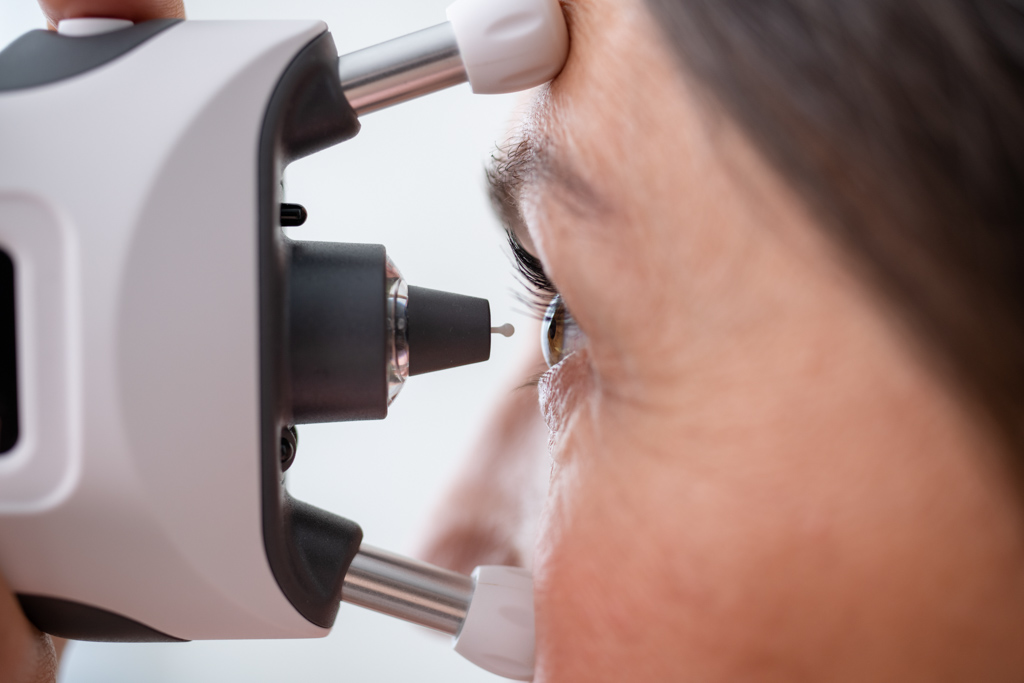
Advantages:
Disadvantages:
Whether you measure with rebound or air puff tonometry, studies have shown that IOP can fluctuate significantly throughout the day, often peaking during the night or early morning (Review of Optometry). Because these spikes happen outside standard office hours, traditional in-clinic tests may miss the times when eye pressure is highest.
Dr. Wirostko explains, “Rebound tonometers have revolutionized eye care by allowing accurate, safe, and repeatable measurements outside the clinic. Patients can now measure IOP at home, giving us a fuller picture of how pressure changes throughout the day.”
These daily fluctuations are more common than most patients realize. In fact, research highlights just how much eye pressure can vary in a 24-hour period:
These findings underscore why consistent monitoring matters, not just during office visits, but over an entire day.
Read more about eye pressure fluctuations.
What Does This Mean for Patients?
Catching those hidden pressure spikes can make the difference between stable vision and glaucoma progression.
Regular at-home monitoring helps eye care professionals identify real-world IOP patterns, adjust medications faster, and determine sooner if surgery is needed. In short, rebound tonometry gives doctors the data to protect sight before permanent damage occurs.
While both air puff and rebound tonometry are reliable, the Goldmann applanation tonometry method remains the gold standard for accuracy. It measures how much force is needed to flatten a precise area of the cornea while using anesthetic drops and a blue light.
“Goldmann is still the most accurate,” says Dr. Wirostko. “But modern rebound tonometers now produce readings that align closely with it, especially when used correctly. That’s a huge leap forward for at-home monitoring.”
Yes, air puff tonometry is accurate enough for most general eye exams. However, it may not detect subtle pressure changes or extreme highs and lows as precisely as rebound or applanation tonometry. It’s best viewed as a convenient screening test rather than a diagnostic gold standard.
Studies show that rebound tonometry closely tracks results from Goldmann applanation tonometry, even without anesthetic drops.
It’s useful for children and patients who require frequent monitoring. The eye pressure meter is also particularly useful for at-home IOP monitoring.
For example, in a clinical study of 150 patients with varying stages of glaucoma, the iCare HOME 2 rebound tonometer showed a high correlation with Goldmann applanation tonometry, with only a 1.5 percent variance, well within the ± 2 mm Hg clinical range.
Patients interested in short-term home testing can lease an iCare HOME 2 tonometer: $249 for the first week, then $149 for each additional week.
The best tonometry method depends on your needs:
“Technology isn’t replacing in-office exams,” Dr. Wirostko adds. “It’s enhancing them, allowing patients and providers to make more informed decisions about their eye health.”
If you’re monitoring glaucoma or have risk factors like high IOP, talk to your eye care professional about whether rebound tonometry might help you track your pressure more effectively.
Learn more about how the iCare HOME2 tonometer can help protect your vision.