Glaucoma is a leading cause of irreversible vision loss, and IOP measurement plays a central role in its detection and management. Over four million people in the United States have glaucoma, with nearly half unaware of the condition (Glaucoma Research Foundation).
Measuring intraocular pressure (IOP) helps doctors identify risk early, track how glaucoma changes over time, and make informed treatment decisions. Understanding how IOP measurements work and why they matter is essential for protecting long-term vision. As glaucoma specialists emphasize, early pressure tracking is critical.
“Because glaucoma often progresses without early symptoms, pressure measurement is one of the most reliable ways to detect risk before vision loss occurs.” – Barbara M. Wirostko, MD, FARVO, glaucoma specialist and Adjunct Professor at the Moran Eye Center.
Key Takeaways
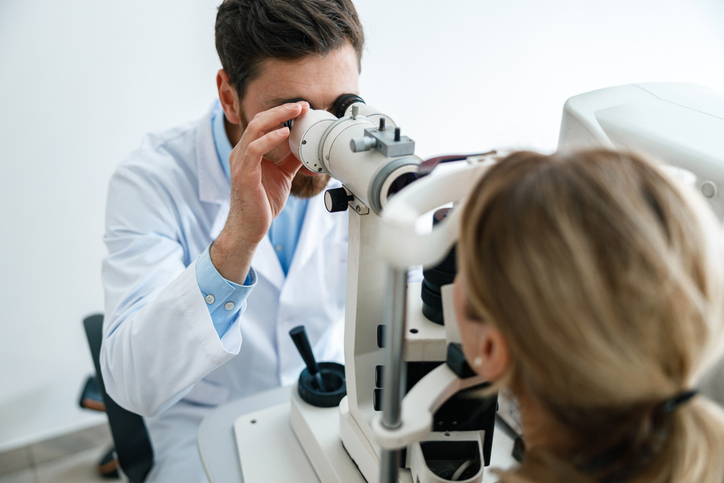
IOP measurement refers to testing intraocular pressure, which is the fluid pressure inside the eye. It’s performed using a process called tonometry and is one of the most critical routine eye care checks. Learn more about tonometry by viewing this beginner’s guide.
Measuring eye pressure helps doctors evaluate how well fluid is produced and drained within the eye. When this balance changes, pressure can rise, placing stress on the optic nerve. Over time, elevated intraocular pressure can contribute to glaucoma and permanent vision loss.
Because you can’t feel your eye pressure, IOP measurement serves as an indicator of eye health, similar to how blood pressure measurements assess cardiovascular health. Regular testing allows eye doctors to detect risk early, monitor changes over time, and guide treatment decisions before damage occurs.
IOP measurement provides insight into several key aspects of eye health:
Fluid Balance Inside the Eye
It evaluates the balance between aqueous humor production and drainage, the fluid that maintains eye shape and nourishes internal structures.
Glaucoma and Ocular Hypertension Risk
Elevated intraocular pressure is the most important modifiable risk factor for glaucoma. Identifying increased pressure early helps reduce the risk of optic nerve damage.
Overall Vision Health
Tracking eye pressure over time helps doctors monitor disease progression and assess whether treatment is effectively protecting vision.
Although different tonometry devices employ different technologies, most IOP measurements rely on the same core principle: the force required to flatten or deform the cornea gently.
In contact methods such as applanation tonometry, pressure measurements test the cornea’s resistance to a small, controlled force. Non-contact tests use a brief puff of air and sensors to detect the cornea’s response. In both cases, the device converts this physical response into an eye pressure reading measured in millimeters of mercury (mmHg).
Because the cornea itself can vary in thickness and rigidity, eye doctors interpret IOP readings alongside other clinical findings. A thicker cornea may produce a higher reading, while a thinner cornea may underestimate actual pressure. That’s why IOP measurement is never evaluated in isolation.
Tonometry is the most common means of measuring IOP. However, other options are available, depending on the setting and patient needs:
Air-puff Tonometry (Non-Contact)
A brief puff of air is directed at the eye to estimate pressure based on corneal response. This method is quick and often used for screening.
Applanation Tonometry
After application of numbing drops, a specialized instrument gently touches the cornea to measure resistance. Goldmann applanation tonometry is considered the clinical standard.
Rebound and Handheld Tonometry
Rebound tonometry uses a small, lightweight probe that briefly contacts the eye to measure pressure. Most handheld tonometers use this technology, which does not require anesthetic drops and is well-suited for frequent testing.
Handheld devices are used in clinics and at home to capture eye pressure patterns throughout the day, helping identify fluctuations and pressure spikes that single office readings may miss.
“Glaucoma management depends on understanding pressure patterns over time, not just isolated readings. Handheld tonometry allows us to see what is happening outside the clinic, where many pressure changes actually occur.” – Barbara M. Wirostko, MD, FARVO, board-certified ophthalmologist and glaucoma specialist, Moran Eye Center.
You can read more about handheld tonometers here.
Eye pressure is measured in millimeters of mercury (mmHg). A typical reference range for intraocular pressure is 10 to 21 mmHg, but these numbers are only a starting point.
IOP readings generally fall into three broad categories:
However, IOP numbers don’t exist in isolation. Eye pressure naturally fluctuates throughout the day and can vary based on body position, age, genetics, medications, and overall health. Consequently, doctors typically don’t rely on a single reading to assess risk.
| IOP Range (mmHg) | Clinical Meaning |
| < 10 | Low pressure, uncommon, may indicate other concerns |
| 10–21 | Typical reference range |
| 22–25 | Elevated, requires monitoring. |
| > 25 | Higher risk, often treated |
| Any range | Risk depends on optic nerve health and individual tolerance. |
Instead, eye care professionals interpret IOP values alongside:
For many patients, doctors establish a target IOP, a personalized pressure range designed to protect the optic nerve rather than to meet a universal standard.
Regular intraocular pressure measurement is essential because elevated eye pressure is the most important modifiable risk factor for glaucoma. While not everyone with high IOP develops glaucoma, consistently elevated pressure increases stress on the optic nerve and raises the risk of permanent vision loss.
One of the most critical findings in glaucoma research is that lowering eye pressure is the only proven way to slow disease progression. That’s why IOP measurement plays such a central role in treatment decisions.
Landmark clinical studies illustrate this clearly:
These findings explain why eye doctors rely on repeated IOP measurements to guide care. Measuring pressure over time allows clinicians to determine whether treatment is effective, when adjustments are needed, and how aggressively they must manage your glaucoma to protect vision.
In practice, these benefits translate into earlier detection, better monitoring, and more effective treatment decisions.
| Pressure Pattern | Typical Clinical Response |
| Stable within the target | Continue treatment |
| Gradual upward trend | Adjust medication |
| Frequent spikes | Increase monitoring |
| High despite treatment | Consider laser or surgery. |
One of the challenges with glaucoma is that it often progresses without early symptoms. Many people don’t notice changes in vision until damage has already occurred. Routine IOP measurement allows eye doctors to detect risk earlier, monitor subtle changes over time, and intervene before significant vision loss develops.
IOP measurement matters for several key reasons:
Although a typical reference range for IOP is 10 to 21 mmHg, it’s essential to interpret these numbers in context. Some individuals tolerate higher pressures without optic nerve damage, while others develop glaucoma within the normal range. That’s why professional evaluation and consistent measurement are critical.
In short, IOP measurement is a simple, painless test that plays a central role in protecting long-term vision by identifying silent eye disease before vision is lost.
Intraocular pressure doesn’t remain fixed. Even in healthy eyes, pressure naturally varies during a 24-hour cycle, rising and falling with changes in body position, fluid dynamics, and biological rhythms.
Research has shown that this daily (diurnal) variation exists in both normal individuals and people with glaucoma, though the pattern and magnitude can differ.
In glaucoma patients, IOP fluctuations can be more pronounced. A review of recent studies found that individuals with glaucoma tend to exhibit larger swings in pressure compared with those without the disease, even when average pressures are similar. These variations may influence how the disease progresses over time.
In one study of adult glaucoma patients, about two-thirds of peak pressure readings occurred outside typical office hours. Overall, daily IOP fluctuation (about 7 mmHg) was significantly higher than pressure variation measured during standard clinic visits (about 4 mmHg).
This study suggests that many pressure spikes happen outside routine measurements. Additionally, patients might miss those spikes without comprehensive monitoring.
Large fluctuations, especially swings exceeding 8 mmHg, have been observed more frequently in patients with progressing glaucoma, underscoring the clinical importance of trends over time.
“We often see patients whose pressure looks acceptable in the clinic but behaves very differently over a full day. That variability can matter just as much as the average number.” – Barbara M. Wirostko, MD, FARVO, glaucoma specialist and Adjunct Professor at the Moran Eye Center.
Several everyday factors influence these changes:
Time of Day
IOP follows a daily rhythm. For many people, eye pressure is highest during the night or early morning and lowest in the afternoon. Because most eye exams occur during daytime hours, peak pressures may go undetected without additional monitoring.
Body Position
Eye pressure increases when lying down compared with sitting or standing. Changes in blood flow and fluid dynamics while supine can temporarily raise IOP, particularly during sleep.
Fluid Intake and Caffeine
Drinking large amounts of water quickly or consuming caffeine can cause short-term increases in eye pressure. These changes are usually temporary but may be more significant in individuals with glaucoma.
Stress and Physical Strain
Emotional stress, pain, or physical actions such as eye rubbing, squinting, or heavy exertion can cause brief pressure spikes.
Overall Health Factors
Blood pressure, sleep patterns, and certain medications can also influence IOP throughout the day.
While everyone experiences some degree of fluctuation, large or frequent pressure swings are more concerning.
Research suggests that wide variations in IOP, particularly changes of 8–10 mmHg or more, may increase the risk of glaucoma progression by placing repeated stress on the optic nerve.
This natural variability is one of the reasons repeated IOP measurement and trend analysis are so crucial in glaucoma care.
Because intraocular pressure fluctuates throughout the day and night, measurements taken during a single office visit often provide only a partial picture. Home IOP monitoring allows eye pressure to be measured in real-world conditions, revealing patterns and pressure changes that eye doctors might not capture during routine exams.
For patients with glaucoma or elevated intraocular pressure, this additional data can be essential in guiding care.
One example of a home monitoring solution is the iCare HOME2 tonometer, a handheld device designed for patient-performed IOP measurement outside the clinic.
Devices like iCare HOME2 allow repeated measurements throughout the day without numbing drops, making it easier to capture pressure trends and identify spikes that might otherwise go undetected during office visits.
Home IOP monitoring is used under the guidance of an eye care professional and looks to supplement, not replace, regular eye exams.

Home IOP monitoring adds context to in-office testing by capturing how eye pressure behaves between visits. These insights help doctors better understand pressure patterns that influence glaucoma care.
“Home IOP monitoring doesn’t replace eye exams, but it gives us data we simply can’t capture during office visits alone.” – Barbara M. Wirostko, MD, FARVO, glaucoma specialist and Adjunct Professor at the Moran Eye Center.
Capture Daily and Overnight Pressure Changes
IOP follows a natural daily rhythm and is often highest at night or early in the morning. Home monitoring enables patients to measure eye pressure at different times of day, including periods not typically assessed in the clinic.
Detect Pressure Spikes
Sudden increases in eye pressure can strain the optic nerve and accelerate disease progression. These spikes often occur outside regular office hours and may go undetected without repeated measurements.
Support Personalized Treatment Decisions
By revealing how pressure behaves over time, home IOP data helps doctors fine-tune treatment. That can reduce the risk of undertreatment or overtreatment and support more precise use of medications, laser therapy, or surgery.
Reduce Reliance on Frequent Office Visits
For some patients, especially those with stable disease or limited access to care, home monitoring can supplement in-office testing, reduce the need for frequent appointments, and maintain close oversight.
Improve Post-Surgical Monitoring
After glaucoma procedures, frequent pressure checks are often necessary to ensure healing and treatment success. Home IOP measurement can provide timely feedback during this critical period.
Encourage Patient Engagement
Monitoring eye pressure at home helps patients better understand their condition and actively participate in their care, thereby improving adherence and peace of mind.
Home IOP measurement may be invaluable for:
IOP measurement is more than a routine test. It’s a cornerstone of glaucoma care. When eye pressure is consistently tracked and correctly interpreted, doctors can intervene earlier, adjust treatment effectively, and reduce the risk of vision loss.
If you have glaucoma, elevated eye pressure, or significant risk factors, ask your eye doctor how often your IOP should be measured and whether additional monitoring may be beneficial.
Related Reading
Intraocular Pressure Testing for Glaucoma Treatment and Monitoring
The Measurement of Intraocular Pressure – Protect Your Vision
Understanding the Importance of Eye Pressure Measurement for Glaucoma Treatment
Glaucoma and Eye Pressure – The Key to Preserving Sight