Monitoring intraocular pressure (IOP) is essential for people at risk of glaucoma and other eye conditions. High IOP can be a risk factor for glaucoma, a disease that damages the optic nerve and can lead to vision loss. Fortunately, you can test eye pressure from home to help manage glaucoma.
Traditionally, eye doctors measure eye pressure in a clinic using Goldmann Applanation Tonometry (GAT). The device is the gold standard for measuring eye pressure.
But what about eye pressure measurements outside office hours?
With technological advancements, eye pressure meters allow you to monitor IOP from the comfort of your own home, eliminating the need to visit an eye doctor. But how reliable are these eye pressure measurement devices, and who should use them?
This guide explores whether you can monitor IOP at home, how eye pressure meters work, and how to use them correctly.
Yes, IOP measurement from home is possible with a handheld tonometer, a device designed for personal use. Traditionally, eye care professionals perform IOP tests in the clinic using specialized equipment. But at-home IOP monitoring can help track IOP spikes and provide valuable data between visits.
An eye pressure meter is invaluable for:
A home tonometer can provide a clearer picture of eye health over time. However, home readings are supplemental. You must still undergo professional exams, as factors such as eye drops, corneal thickness, and technique can affect accuracy.
To measure ocular pressure at home, you’ll need a user-friendly and reliable eye pressure meter. One of the most popular options is the iCare HOME2 tonometer. This handheld tonometer doesn’t require anesthetic drops and is perfect for home use.
Home tonometers are user-friendly and safe for self-use. These eye pressure measurement devices enable patients to conduct IOP measurements independently, making it easier to track their readings.

Most eye pressure meters, such as the iCare HOME2 tonometer, use rebound tonometry, which doesn’t require anesthetic drops. The tonometry device gently bounces a small probe against the eye’s surface to measure resistance. Readings happen within seconds.
Home eye pressure measurements are less precise than Goldmann Applanation Tonometry (GAT). However, they offer a practical way to detect IOP spikes and trends between clinic visits.
Here are the essential benefits of a home tonometer to measure eye pressure:
Other devices measure eye pressure using variations of this method. However, rebound tonometry is the most practical for use at home.
Using a home tonometer correctly is essential for obtaining accurate IOP measurements. Improper technique can lead to inconsistent IOP measurements. Following a structured approach can ensure reliable results and better IOP testing over time.
The process typically involves preparing the device, positioning it correctly, and taking multiple readings to track IOP fluctuations. Below is a simple guide to help you test your eye pressure effectively from home.
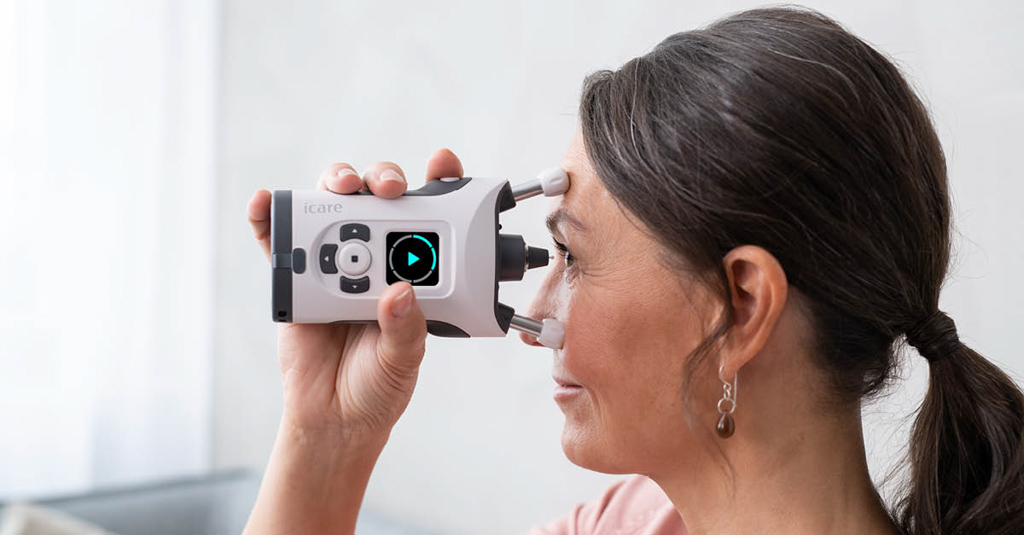
Once you’ve taken your readings, understanding what they mean is crucial for effective IOP monitoring. There’s a clear link between glaucoma and eye pressure.
A single measurement may not tell the whole story, as IOP fluctuations occur naturally throughout the day. Instead, tracking trends over time helps identify patterns. Fluctuations could indicate a risk for tension glaucoma or other eye conditions.
Normal intraocular pressure (IOP) typically falls between 10-21 mmHg, but what’s “normal” can vary from person to person. You should discuss consistently high readings or sudden IOP spikes with your eye care professional. They could signal the need for adjustments in treatment or further examination of your optic nerve and visual fields.
How to interpret your home eye pressure tests:
Contact your eye care professional for further evaluation if your readings consistently fall outside the normal range.
A home tonometer offers a convenient way to measure IOP. However, it has advantages and limitations.
You must consider the pros and cons to determine whether a home tonometer is right for managing your glaucoma.
✅ Pros
❌ Cons
A home tonometer isn’t necessary for everyone. However, it can be a valuable tool for individuals who need frequent IOP measurements outside routine eye exams.
Eye conditions like ocular hypertension require close IOP monitoring to prevent optic nerve damage. Home monitoring detects changes in IOP fluctuations that might go unnoticed between visits to an eye care professional.
If you fall under any of these scenarios, a home tonometer is helpful:
However, anyone considering home IOP tests should consult their doctor before purchasing a home tonometer.
A home tonometer provides a convenient way to measure eye pressure. But remember. It doesn’t replace professional care.
Discuss options with your doctor, such as the iCare HOME2 tonometer. They can help you decide if at-home IOP monitoring is right for you.
You can rent or purchase the iCare HOME2 tonometer. Don’t allow your glaucoma to go unchecked. Start monitoring your IOP now and see what you’re missing!