Glaucoma is often misunderstood. But one thing is sure: it’s a leading cause of blindness worldwide. Unlike many conditions, glaucoma symptoms may not appear until significant, permanent vision loss has already taken place.
In the U.S., 4.2 million people have glaucoma, and nearly half don’t know it (Glaucoma Research Foundation). It’s not a single disease, but a group of eye conditions that damage the optic nerve, often due to increased pressure inside the eye.
That’s why early detection, regular eye care, and IOP measurement (intraocular pressure) are critical.
Let’s break down the symptoms, risk factors, and how tools like a tonometer can help protect your sight.

Our chances of getting glaucoma increase significantly with certain risk factors. Most people with glaucoma fall into at least one high-risk group.
While anyone can develop it, you’re much more likely to be affected if you meet one or more of the following conditions:
Glaucoma is especially dangerous because it often shows no early symptoms. In the U.S., around 4.2 million people have glaucoma, and almost half don’t know it. Globally, it affects over 80 million people and causes blindness in nearly 6 million cases (Glaucoma Research Foundation).
If you belong to a high-risk group, it’s crucial to monitor your intraocular pressure (IOP) regularly. Using a tonometer to measure your eye pressure can help detect glaucoma early, before vision loss occurs.
No, glaucoma is not curable, but it is treatable.
When caught early, treatment can prevent or slow vision loss through the use of medications, laser procedures, or surgery.
The goal of treatment is to lower intraocular pressure (IOP) and prevent further damage to the optic nerve. While you can’t restore lost vision, proper management can preserve your remaining sight for life.
Early screening, primarily through the measurement of intraocular pressure, is critical. Regular eye pressure checks can detect glaucoma long before symptoms appear, giving you the best chance at preserving vision.
The first signs of glaucoma are often subtle and easy to miss.
Early symptoms may include:
“The key to healthy eyes is pressure control. If you wait for symptoms, you’ve waited too long.”
Dr. Barbara M. Wirostko, MD, glaucoma specialist
These early warning signs can develop slowly and are often mistaken for normal aging or eye strain. However, they may signal that eye pressure is rising and beginning to damage the optic nerve, a key indicator that glaucoma is developing.
Catching these early warning signs, or better yet, catching high IOP before it starts, is critical.
The most effective way to prevent glaucoma from progressing is to monitor and manage your intraocular pressure, even if you don’t have noticeable symptoms.
Elevated eye pressure is the leading cause of optic nerve damage in glaucoma. It often rises without symptoms, making early testing the most effective prevention strategy. That allows you and your eye doctor to take steps to slow or stop further vision loss.
Learn how often you should measure your IOP.
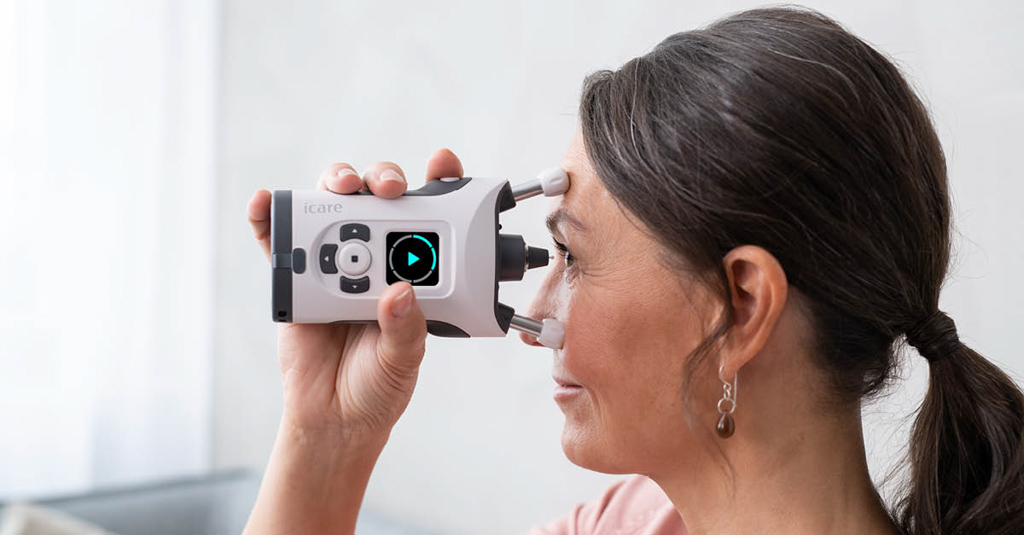
We’ve stressed the importance of IOP measurement. Let’s take a closer look at how to do that.
A tonometer is the device that measures the pressure inside your eye. There are a few types:
Handheld devices, such as the FDA-approved iCare HOME2 tonometer, offer reliable readings with minimal training requirements.
“We’ve reached a point in glaucoma care where patients can take control. A portable tonometer empowers individuals to monitor their eye pressure from the comfort of their own homes. That’s a game-changer.”
Dr. Barbara M. Wirostko, MD, glaucoma specialist
They’re used in telemedicine, clinics, screenings, and even at home. They’re vital for those managing chronic high eye pressure.
The eye pressure meter requires a prescription from a doctor. You can rent devices like the iCare HOME2 for as little as one week for $249. Additional weeks cost $149.
You also have the option to purchase the tonometer for $2,995. Purchasing the tonometer is HAS and FSA-eligible, with monthly payments available through Affirm.
| IOP Level (mmHg) | Classification | Risk Level |
| 10–21 | Normal | Low |
| 22–25 | Borderline / Ocular Hypertension | Moderate |
| 26+ | High Eye Pressure | High major glaucoma risk |
A consistent IOP above 21 mmHg is considered high. This condition, known as ocular hypertension, increases the risk of damage to the optic nerve.
For most people, a normal range falls between 10 and 21 mmHg.
High IOP doesn’t always mean you have glaucoma, but it increases the likelihood of damaging the optic nerve, especially if left untreated.
Get the facts on normal eye pressure.
High eye pressure often causes no symptoms on its own. That’s why routine IOP measurement is critical. It’s the only way to detect pressure-related risk before vision loss begins.
A tonometer is the device that measures the pressure inside your eye. Whether used in a clinic or at home, they provide a fast and non-invasive way to detect problems early.
If high IOP is detected, your eye doctor may recommend:
The goal of every treatment is the same: to reduce intraocular pressure and prevent further damage to the optic nerve.
Without early treatment, glaucoma symptoms become more intense and often irreversible.
At this stage, you may experience:
These advanced signs are often associated with acute angle-closure glaucoma, a medical emergency characterized by a sudden increase in intraocular pressure when the eye’s drainage angle becomes blocked.
If these symptoms occur, don’t wait. Call an eye doctor immediately.
By the time these signs appear, optic nerve damage may already be severe. That’s why earlier steps, such as routine IOP testing with a tonometer, are so critical. The best way to protect your vision is to catch glaucoma before it reaches this point.

Glaucoma isn’t a one-size-fits-all condition. There are multiple types, each with its own causes, risk factors, and rate of progression. Some develop gradually and silently. Others strike quickly and require urgent care.
Understanding the type of glaucoma you have is critical because treatment strategies vary. However, one thing remains constant: monitoring eye pressure is essential across all types of glaucoma.
These types of glaucoma vary in onset, cause, and progression — but they all pose a serious threat to healthy eyes.
If any of these conditions apply, you should measure your eye pressure regularly, ideally with a tonometer or through contact tonometry at an eye care clinic.
Many people falsely believe that glaucoma has noticeable symptoms or that it’s easy to treat once it starts. In reality:
That’s why regular IOP monitoring, especially with a reliable eye pressure meter, is your best line of defense.
If you’re a provider, mobile clinic, or caregiver, a tonometer provides an affordable and accurate way to monitor your IOP.
“You can’t manage what you don’t measure. A tonometer puts power in your hands.”
Dr. Barbara M. Wirostko, MD, glaucoma specialist
Healthy eyes depend on action, not luck.
Because glaucoma doesn’t wait, and neither should you. Explore tonometers or rent the iCare HOME2 today.

Glaucoma risk rises after age 60. For African Americans, risk can begin earlier, around age 40.
Avoid smoking, excessive caffeine, and activities that strain the eyes or increase pressure, such as heavy weightlifting without medical clearance. Always follow your doctor’s guidance.
Glaucoma itself doesn’t shorten life expectancy. With proper management, most patients can maintain functional vision for their lifetime.
No. Glaucoma cannot go away or be cured. But with treatment, its progression can be slowed or stopped.
Early signs include gradual loss of peripheral vision, blurred vision, mild eye pain, and sensitivity to light. Often, there are no symptoms at all until vision loss occurs.
No, but it is highly treatable. Early detection enables the use of medication, laser treatment, or surgery to preserve vision.
The primary risk factor is increased eye pressure resulting from poor fluid drainage through the trabecular meshwork.
Yes, in the early stages. But advanced glaucoma can cause tunnel vision and impair driving safety. Regular IOP checks help slow progression.
The first stage is often ocular hypertension or high eye pressure without vision loss. This stage is when treatment can be most effective.